It’s your skin, take care of it!
Webinar Skin care 04/02/2025 from 10:00 till 12:00 (Brussels time)
Don't miss this event
Occupational skin diseases, such as dermatitis, eczema, allergic reactions, etc., can be caused by various factors. In this webinar, we will look at these occupational diseases and their causes. You will also be given practical examples of how to manage the Skin care of your employees in your company and organisation.
Program
- Opening and introduction
- Occupational Skin Diseases: Causes and Consequences - Prof. Dr. Thomas Rustemeyer -Dermato-Allergology and Occupational Dermatology, Amsterdam University Medical Centers, The Netherlands
- Practical tips & tools - Simon Boddy and Dr. rer.nat. Susanne Kemme, members of the working group SkinCare
- Q&A
- Closing
Registration (free of charge)
The link to join the webinar will be sent to registered persons a couple of days before the webinar
World day Skin Care at Work
In order to draw attention to the need for proper skin care at workplaces, the ESF takes the initiative to declare the 2nd day of the 2nd month of the year "World day Skin Care at Work".
The origin for the choice for the 2nd of the 2nd is the surface of skin of an 'average' adult, being 2 m².
In 2025, a webinar on skin care at work is organised (as 2/2 is a Sunday in 2025, the webinar takes place on 4/2). In the future further initiatives will be taken on that day.
4 magic number(s) for your skin at work
Different types of skin conditions can occur as a result of occupational activities
Such as dermatitis, eczema, allergic reactions, etc. are caused by contaminants and substances (e.g. oils, paint, cement, solvents, acids, ...).
Also, irritation, redness or dryness are very common and can even be caused by seemingly innocent work situations such as prolonged exposure to water.
Make sure to have the correct products available at the place where they are needed.
4 magic numbers for your skin at work
1. Pre-work product
Also known as skincare prevention products or barrier cream: product applied before the start of the work as a protective layer.
Different types of products exist to ensure the right protection for the risks encountered on the job. Pre-work products can under no circumstances replace the use of protective gloves or other personal protective equipment.
Taking into account the expected exposure to contaminants and substances during work, apply the appropriately chosen pre-work product to create a protective layer. Repeat the application as often as necessary, according to the recommendations of the manufacturer of the product.
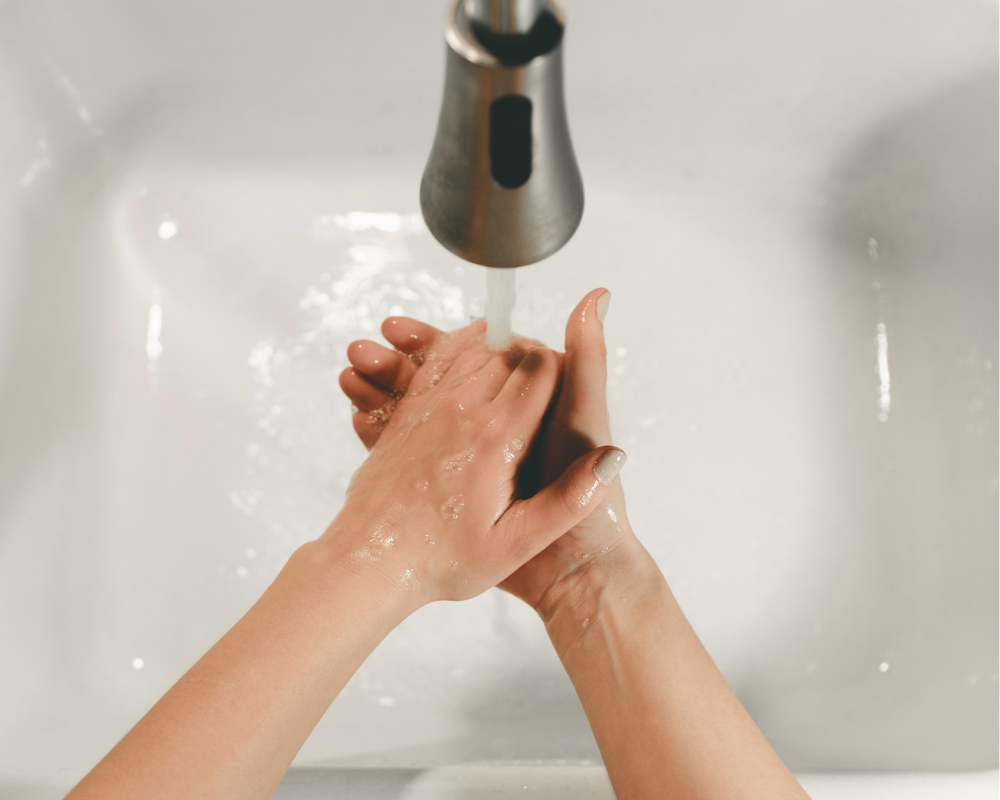
2. Skin cleansing product
Product used to clean the skin at the end of the shift or in between. With regard to the need, the mildest possible product should be chosen.
Avoid harsh scrubbing products.
This step is not only necessary for good hygiene, but also to eliminate possible damage to the skin elements. The correct chosen pre-work product will help to avoid having to use aggressive cleansing products.
3. After-work product
Product to help to restore the skin to the normal healthy state.
The product needs to be chosen for the type of skin and (potential) damage. These products will help to restore your skin to its normal condition giving it the necessary moisture and nutrition.
Use these products at the end of your shift.
4. Sanitizers
Aim to make inactive pathogenic germs on skin and surfaces and to interrupt infection chains.
This procedure prevents or reduces the transmission of pathogenic germs.
During waves of illness and in winter, sanitizers may also be necessary outside of nursing profession and food processing industries, e.g. in industry, trade or in public.
If required sanitizers can be used at the work place in addition or instead of hand cleansers.
Specialised manufacturers develop professional products that are adapted to different occupational situations and are at the same time as effective as possible while being mild. They are preferable, not greasy or sticky.
Your professional supplier will gladly advice you on the available products and those that are best suited for your risks and work environment. They will also help you to develop a skin care concept and provide the necessary training material.